Monday, December 21, 2009

Objects of governance: From things to behaviors

In spite of our penchant for abstraction, we think best in concrete terms. That means we prefer to think about things rather than processes, including when it comes to communications regulation. The growing intangibility of our world is making this harder to do, however.

The legal scholar William Boyd introduced me the concept of an “object of governance”, i.e. the explicit focus or nominal topic of regulatory activity. [1] Boyd is concerned with deforestation as an object of climate governance [2]; a quick web search throws up examples like organized crime, “The East”, the Sahel, and risk. Objects of communications regulation include personally identifiable information (PII), spectrum, phone service, and the internet.

While most of these objects are intangible, they are at least to some extent thing-like; they’re nouns. It becomes more tricky when regulation addresses behavior – that is, verbs. I’ll work through a few examples in communications regulation where the object of governance started off as a thing/noun, and is becoming a behavior/verb:

Privacy: From PII to Use

The current approach to protecting privacy on the web is rooted in the notion of data security: information exists somewhere, and needs to be protected. However, an alternative conception based on appropriate use rather than access restrictions is emerging. [3] [4] The idea is that the tradition Notice & Choice regime is complemented by use-and-obligations model where organizations disclose the purposes to which they intend to put information, and undertake to limit themselves to those uses.

Wireless regulation: From spectrum to radio operation

Radio regulation has been framed in terms of government management of a “spectrum asset” for many decades. Even though in practice the regulations concerned themselves with the operating parameters of transmitters, the idea that some underlying asset existed has been a useful fiction, particularly as the detailed technology and service choices have been increasingly privatized through auctions of general-use licenses.

However, a new generation of radio technologies has been used to call this approach into question. “Open Spectrum” advocates have argued that dynamic wireless technologies obviate many underlying assumptions of current regulation, and prefer “commons” access over exclusive licenses. [5] Some in the RF engineering community recommend that regulation take into account dynamic adaptation at all layers in the network stack, not just at the radio layer. [6] I have argued that a static, spectrum-as-asset approach is not a given; a more dynamic radio-as-trademark interference metaphor is perfectly workable. [7]

Universal Service: From telephony to internet access

The Universal Service Fund in the US, and its equivalents in other countries, was conceived of as guaranteeing phone service to those who would not otherwise be able to afford it, particularly in rural communities. There is no a great deal of debate about extending the universal service concept to the internet. However, since internet access can come in an unlimited variety of flavors, it is unclear what the goal of the program should be. Phone service is the same everywhere; but what broadband speed is “good enough”? The regulatory debate is moving away from how to fund phone service to how to define baseline access.

Common carriage: From a neutral network to network management

The most recent of these debates concerns the 21st century equivalent of common carriage for the internet. The rallying cry of Network Neutrality had satisfyingly thing-like connotations: there was a network, and it had to have the attribute of neutrality (noun/adjective). Over time is has largely been agreed that network operators should have some discretion in managing the behavior of their network. The question has now become a behavioral one: what is degree of network management (verb) is appropriate?

Implications

A shift in the objects of governance from things to behaviors suggests a shift in regulation from ex ante to ex post action, that is, from making detailed rules up-front to stating general principles and enforcing breach after the fact. In Law’s Order [8], economist David M. Friedman compares speed limits (ex ante) with reckless driving (ex post), and observes that ex post punishments are most useful when the behavior is determined by private knowledge that the regulator cannot observe.
"Ex ante punishments can be imposed only on behavior that a traffic cop can observe; so far, at least, that does not include what is going on inside my head. Ex post punishments can be imposed for outcomes that can be observed due to behavior that cannot—when what is going on inside my head results in my running a red light and colliding with another automobile."
When an object of governance is thing-like, and changes in the attributes of those things are easily observed – a data breach occurs, some packets don’t cross the network – then ex ante rules are attractive. When governance concerns behavior, particularly behavior that is difficult to observe – the uses to which data is put by a company, whether a particular network management technique discriminates against a competitor – then the regulator has to fall back on ex post enforcement. The difficulties with ex post are well-known, though: from providing sufficient clarity up-front about what would constitute a breach, to the political difficulty of exacting very occasional but very large penalties from powerful players.

Footnotes

[1] Note that this is not the traditional meaning of the term, which used “object” as synonymous with “objective”, e.g. Edmund Burke: “To govern according to the sense and agreement of the interests of the people is a great and glorious object of governance. This object cannot be obtained but through the medium of popular election, and popular election is a mighty evil.”

[2] Boyd, William, “Ways of Seeing in Environmental Law: How Deforestation Became an Object of
Climate Governance”, to be published in Ecology Law Quarterly

[3] Daniel J. Weitzner, Harold Abelson, Tim Berners-Lee, Joan Feigenbaum, James Hendler, Gerald J. Sussman (2007) “Information Accountability”, Computer Science and Artificial Intelligence Laboratory Technical Report, MIT-CSAIL-TR-2007-034, June 13, 2007

[4] Business Forum for Consumer Privacy, “A New Approach to Protecting Privacy in the Evolving Digital Economy: A Concept for Discussion”, March 2009

[5] Kevin Werbach (2003), "Radio Revolution: The Coming of Age of Unlicensed Wireless," New America Foundation and Public Knowledge, no date on document, dated 15 Dec 2003 on NAF site

[6] Preston Marshall (2009) “Quantifying Aspects of Cognitive Radio and Dynamic Spectrum Access Performance” (see slides 15, 16)

[7] J Pierre de Vries, (2008) "De-situating spectrum: Rethinking radio policy using non-spatial metaphors" New Frontiers in Dynamic Spectrum Access Networks, 2008 (DySPAN 2008). http://ssrn.com/abstract=1241342

[8] David M. Friedman, Law's Order: What Economics Has to Do with Law and Why It Matters, Princeton University Press: 2001. See Chapter 7 for a discussion of ex ante/ex post.

Friday, December 18, 2009

Norms, mechanisms and policy imperatives

As I stumble towards a paper about changes in governance required by changing technology (part of the Silicon Flatirons New Models of Governance project) I’ve found Peter Cowhey and Jonathan Aronson’s magisterial new book on the political economy of global communications [1] very useful.

In the Summary and Conclusions, co-written with Don Abelson, they introduce four “principles” for market governance in the light of current conditions, and ten “norms” needed to implement the principles (see Appendix 1 below). They define market governance as “the mixture of formal and informal rules and the expectations about how markets should logically operate.”

When I look at their norms, I see a set of choices for the set-points of a small number of governance mechanisms:
  • Subsidy (Norm 2)
  • Competition policy (Norms 3, 5)
  • Regulatory “touch” (Norms 1, 4, 6)
  • Property rights (Norms 8, 9, 10)
As one might expect from a work devoted to the governance of markets, the norms (and the governance mechanisms they imply) do not address some non-economic public policy imperatives. [2] For contrast, consider the “permanent policy imperatives” I introduced in my paper “Internet Governance as Forestry” [3]
  1. Public Safety. Protecting citizens is a primary responsibility of government.
  2. Consumer Protection. Policy makers take action when lawmakers conclude that commercial activity needs to be circumscribed in the public interest.
  3. Culture and Values. In order to protect and express a culture’s values, policy makers seek to limit some kinds of speech and promote others.
  4. Government Revenue. Money needs to be raised and redistributed by federal, state and local treasuries; this includes taxes, fees, levies, subsidies, and tax breaks.
  5. Economic Vitality. A healthy market produces goods and services that citizens value.
Now, these two lists are different in kind; Cowhey & Aronson’s norms and implied mechanisms are means, and my policy imperatives are ends. However, the mismatches are revealing.

My list of policy imperatives does not include subsidy, which is implied by Cowhey & Aronson’s Norm 2, “Invest in virtual common capabilities”. In the light of their work, I now realize that this is an omission; distributing government largesse is a permanent policy imperative.

The mechanisms of competition policy and property rights are means to the end of economic vitality, my fifth policy imperative. The mechanism of regulatory “touch” is a means that I address in my paper under the heading of Principles (see Appendix 2, below); as it happens, I concur with their recommendations for light touch regulation.

The difference in emphasis is perhaps most noticeable in the absence of norms/mechanism that speak to the “soft” policy imperatives. While Cowhey & Aronson’s Norm 7 addresses media content, and thus recognizes some value in “culture and values”, my third policy imperative, it is not implementable in the way the others are; it merely recommends a balance between encouraging trade and protecting cultural values. The “public safety” imperative is completely absent. While one may argue that Imperative 2, “consumer protection”, is to be achieved through competition policy (Norms 3 and 5), Cowhey & Aronson do not explicit mention of consumers.

Footnotes

[1] Cowhey, Peter F. and Jonathan D. Aronson, Transforming Global Information and Communication Markets: The Political Economy of Innovation, MIT Press (February 15, 2009). Softcopy available at http://globalinfoandtelecom.org/book/ (look for the “Download free under Creative Commons license” link)

[2] It is telling that Cowhey and Aronson seem to equate the public interest with consumer welfare, an economic construct. For example, on p. 17 they write: “The main challenge for governance is creating appropriate new spaces for market competition that allow the most important potential for innovation to play out in a manner that enhances consumer welfare (the public interest).”

[3] De Vries, Pierre, “Internet Governance as Forestry: Deriving Policy Principles from Managed Complex Adaptive Systems”, TPRC 2008. Available at SSRN: http://ssrn.com/abstract=1229482

Appendix 1: Four guiding principles and ten norms to help implement them
(Cowhey & Aronson (2009) Table S.1, p. 265

Principles
  1. Enable transactions among modular ICT building blocks.
  2. Facilitate interconnection of modular capabilities.
  3. Facilitate supply chain efficiency, reduce transaction costs.
  4. Reform domestically to help reorganize global governance.
Norms
  1. Delegate authority flexibly.
  2. Invest in virtual common capabilities; be competitively neutral.
  3. Use competition policy to reinforce competitive supply chains.
  4. Intervene lightly to promote broadband networks.
  5. Narrow and reset network competition policy. All networks must accept all traffic from other networks. Narrow scope of rules to assure network neutrality. Separate peering and interconnection for provision of VANs.
  6. Government should allow experiments with new applications.
  7. Create rules for globalization of multimedia audiovisual content services that encourage international trade and foster localism, pluralism, and diversity.
  8. Tip practices toward new markets for digital rights.
  9. Promote commercial exchanges that enhance property rights for personal data and mechanisms to do so.
  10. Users own their information and may freely transfer it.
Appendix 2: Four ecosystem management principles
De Vries (2008), Table 3, p. 26
  1. Flexibility: Determine ends, not means.
  2. Delegation: Most problems should be solved by the market and civil society.
  3. Big Picture: Take a broad view of the problem and solution space.
  4. Diversity: Multiple solutions are possible and desirable.

Thursday, December 17, 2009

Polling x Lobbying = ?

Polling and lobbying are powerful factors of government that aren’t usually covered in Civics 101. Both are huge industries, and both shape the way political decisions are made. The current wave of web technology is going to create a hybrid form that will reshape politics.

According to 2002 Census data, the marketing research & public opinion polling industry as a whole had revenues of $10.9 billion; special interests paid Washington lobbyists $3.2 billion in 2008 according to the Center for Responsive Politics. Lobbying is as old as politics, but polling is relatively new (19th century), as is its premise: the importance of mass public opinion in government and diplomacy (18th century). Lobbyists are key players in Washington DC, and there’s a revolving door that moves former federal employees into jobs as lobbyists, and that pulls former hired guns into government careers or political appointments. Polling expertise is a key attribute in top political advisors, and something that politicians – and administrations – do incessantly.

The social media technologies of Web 2.0 will create a lobbying/polling hybrid and create a new political power center to rival traditional lobbying and polling. Efforts by government to solicit citizen opinion, like the Ideascale site soliciting input on the National Broadband Plan, or the Open for Questions site run by the White House, are a way for citizens to engage in little-L lobbying. These channels invite manipulation that will amount to big-L lobbying. In the same way that astroturfing co-opted grassroots lobbying, political operatives will co-opt the forms of web 2.0 citizen participation. Those who are adept at viral marketing will propel political memes into real-time polling tools in way that amounts to lobbying.

The amplification of the randomly popular that is pervasive on social rating sites like digg will infuse politics, intensifying the temptations of “poll, then decide”. We’ll also likely see something akin to the hollowing out of the media industry mid-list that The Economist charted in “A world of hits”: In movies and books, both blockbusters and the long tail are doing well; the losers are titles (and retailers) in the not-quite-so-good middle ground. Similarly, blockbuster issues will be laid on for the mass public that doesn’t care about politics (shibboleths like taxes and abortion), and niche lobbying on topics like radio spectrum, prison reform, and privacy will become even more fine-grained. Citizen publics will be important in both: as armies of computer-generated extras in the first case, and as engaged semi-experts in the second. Worthy mid-ground issues like trade, education, and energy policy will get steadily shorter shrift.

One implication is that niche topics like hunger policy shouldn’t strive to move up the charts into the middle ground – they’ll just wither there. Rather, niche players should embrace their residence in the long tail and make the most of Web 2.0 phenomena, like Polling x Lobbying, that give them direct access to the appropriate sliver of the policy making elite.

Monday, December 14, 2009

Constructing spectrum – lessons from the history of economics

“Spectrum” is powerful construct; most people assume such a thing exists, and this assumption has regulatory consequences. But how did it come into being? The stories that some social scientists tell about the construction of “the economy” by economics provide some insight.

Timothy Mitchell, for example, argues that the economy was created by economists:

The economy is a recent product of socio-technical practice, including the practice of academic economics. Previously, the term “economy” referred to ways of managing resources and exercising power. In the mid-twentieth century, it became an object of power and knowledge. Rival metrological projects brought the economy into being. [1]

In his chapter in Do Economists Make Markets? On the Performativity of Economics, Michel Callon puts it this way: “To claim that economics is performative is to argue that it does things, rather than simply describing (with greater or lesser degrees of accuracy) an external reality that is not affected by economics.” MacKenzie argues in his chapter of the same book that the Black-Scholes-Merton options pricing model not only helped traders price something that already existed; it also shaped it, since most traders ended up using the model, prices converged to what the model predicted. [2]

In the same way, economists who treat spectrum as an asset (see my post "Property rights without assets") are not simply describing an external reality; they are bringing something into being. One of the key tools in this process is metrology: for example, the gathering of GDP data brings into being “the economy” which is reified through numbers like the GDP. In the same way, the program to make an inventory of spectrum buttresses the spectrum-is-real perspective. (More on spectrum inventories in a future post.)

Implications

World views have consequences, and thus stakeholders. Those who have a stake in the existing spectrum-based regime gain from this view; questioning the validity of “spectrum” undermines the security of their rights and privileges. This applies not only to capitalists who own spectrum licenses, but also to progressives who base their claims to government supervision of radios on the public ownership of the supposed “spectrum asset”. On the other hand, if one thinks of radio regulation simply in terms of the operating rights associated with radios, then a much more dynamic regime can be imagined – one that would benefit both political and commercial entrepreneurs. A non-spectrum world view might also be attractive to current “spectrum owners” who are discontented with their rights. [3]

The political and engineering systems that have co-evolved with the spectrum concept have specific characteristics: largely static allocations of rights to operate defined in terms of fixed frequency ranges. More dynamic approaches don’t fit nicely. For example, Preston Marshall wants to guarantee the right to operate, but not exclusivity over one channel; he proposes to guarantee a licensee (along with others) an aggregate of access to sufficient frequencies to meet a certain amount of service. [4]

This is an approach that focuses on behavior, rather than the exclusive ownership of an asset. As I argued in "Property rights without assets", this is perfectly compatible with a property rights regime, since property rights don’t have to be based on an underlying asset.

The bottom line is that a spectrum-as-asset approach leads one to ignore elements, which leads to inferior rights design. Specifically, receivers have been ignored. If one thinks one’s job is to "carve up spectrum", then you don't have to worry about receivers. But when radio is considered as a system, the receivers determine interference just as much as transmitters, so one has to take them into account explicitly. By analogy: if you're deciding a land trespass case, you don't worry about whether farmer is grazing Holsteins or Friesians. But if you're deciding a trademark dispute, everything depends on what happens in the mind of the consumer (analogous to the receiver). [5]

Footnotes

[1] Mitchell, Timothy (2008) “Rethinking Economy”, Geoforum, Volume 39, Issue 3, May 2008, pp. 1116-1121.

[2] MacKenzie, Donald A, Fabian Muniesa, Lucia Siu (2007), Do economists make markets? On the Performativity of Economics, Princeton University Press, 2007

[3] There is debate about the origin and extent of government property rights in spectrum; see for example the Introduction of William L. Fishman, “Property Rights, Reliance, and Retroactivity Under the Communications Act of 1934”, Federal Communications Law Journal, Vol. 50, No. 1. Fishman concludes: “It would probably be better, therefore, to say that the government regulates electromagnetic radiation in certain defined frequencies, rather than to say it regulates spectrum.”

[4] See e.g. Section 5.4 in the report “Radio Regulation Summit: Defining Inter-channel Operating Rules”.

[5] For more on the virtues of the radio-as-trademark metaphor, see my blog post “De-situating Spectrum: Non-spatial metaphors for wireless communication”, and paper “De-Situating Spectrum: Rethinking Radio Policy Using Non-Spatial Metaphors”

Thursday, December 10, 2009

Property rights without assets

I’m still nagging away at the implications of the fallacy that spectrum exists. Sorry.

I’ve been struck recently that many if not most definitions of property rights seem to turn on a relationship to an asset. For example, Gary Libecap in Contracting for Property Rights defines them as "the social institutions that define or delimit the range of privileges granted to individuals to specific assets" (1990:1); or Yoram Barzel in The Economic Analysis of Property Rights: "Property rights of individuals over assets consist of the rights, or the powers, to consume, obtain income from, and alienate these assets" (1997:2). Such definitions set out to define rights which assure the owner of an asset that they can derive value from that asset.

However, one can have rights to create value that do not require the existence of an underlying asset – unless, of course, one takes the position that the existence of a property right necessarily implies an asset. [1]

Therefore, let me distinguish between any property right, which is an asset in itself, and a property right to exploit an asset, which entails two assets: the right itself, and the underlying asset. All assets can lead to property rights – perhaps tautologically, in that something might not be counted as an asset if it does not have rights associated with it – but not all property rights require assets.

Examples

It always helps to make things concrete. One property right without an underlying asset is a New York taxi cab medallion: it's a right to operate, but there isn't an underlying asset. The right is tied to a particular place (New York), but that place isn't the asset.

Another common asset-less right is a franchise, that is, an agreement to sell a company's products exclusively in a particular area or to operate a business that carries that company's name.

Perhaps my favorite is a trademark, that is, a word, symbol, or phrase, used to identify a particular manufacturer or seller's products and distinguish them from the products of another. One might use the word “Wired” to brand a magazine, but the word isn’t the asset; when I last counted about a year ago, there were about 27 distinct trademarks using the word "wired" in the US.

Notice that permission for an agent to behave in a particular way is the essence of all these rights – and of rights that require assets, too. Therefore, I’d contend that behavior is the key to property rights, and assets are optional.

There are of course many property rights to assets, from owning a pencil to the right to extract oil in a particular region. Note that the underlying assets don't have to be tangible: an algorithm over which one has a patent is a perfectly viable intangible asset (perhaps made so exactly by the property right).

Implications

This distinction between property rights that do and do not require underlying assets matters: if one assumes an underlying asset where there is none, one is liable to over-assign rights.

For example, if trademark regulation assumed that the word being used was the asset, then it might give the owner of the trademark the right to all possible (commercial) uses of the word. There would be only one “Wired” trademark in the US, let’s say owned by Condé Nast; the companies who wanted to use the word to sell cologne, art supplies, energy drinks, stationery, electronic door chimes or automobile wheels would be out of luck. This would be a loss because an entrepreneur could apply the letters w-i-r-e-d to some new product that couldn’t be confused with a magazine without seeking (and probably failing to get) Condé Nast’s permission.

Similar reasoning applies to radio regulation. The existence of radio licenses doesn’t mean that there is an underlying asset, “spectrum”. [2]

If one regards a radio channel as an asset, then (Anglo-American) regulators have shown a proclivity to grant an expansive array of rights. Following the norm of technology and service neutrality, they have defined operating rights so broadly that pretty much preclude all operations that radiate energy in that channel, regardless of its harm to the licensee, in order to allow the licensee to operate in any conceivable way. [3] Such a broad definition forecloses new entry by potentially useful but non-interfering services

A broad definition also forecloses future arrangements of radio operating rights that are not tied to channel-based world view. Bands and channels, as regulatory constructs, are in large part a consequence of the two-stage super-heterodyne radio design that first filters a broad range of frequencies at the "RF stage", and then after down-conversion picks out a narrow range at the "IF stage". This is an old-fashioned approach that is increasingly becoming obsolete [4] - but it is enshrined in regulation.

References

Barzel, Yoram, Economic Analysis of Property Rights, Cambridge University Press 1989, second edition 1997
Libecap, Gary D., Contracting for Property Rights, Cambridge University Press 1990

Footnotes

[1] A view of property rights that does not require the existence of underlying assets is not identical to the "bundle of rights" approach taught in law school property classes; there it's taken as a given that there's an underlying asset - paradigmatically, real estate - and the bundle explains how it can be simultaneously “owned" by multiple parties.

[2] The emergence of the spectrum concept suggests that this is, indeed, the conclusion that has been drawn. Perhaps the reasoning that a property right must entail an asset is one of the reasons why “spectrum” has become such an entrenched concept.

[3] I’m ignoring allowed inter-channel interference; for a discussion of that case, see my report on the meeting held at Silicon Flatirons, “Defining Inter-Channel Operating Rules”

[4] See e.g. Soni & Newman 2009, "Direct conversion receiver designs enable multi-standard/multi-band operation", RF Designline

Monday, December 07, 2009

Alfred Kahn, SURs, and new approaches to radio regulation

I have at last finished writing up a Silicon Flatirons meeting on rules for inter-channel radio interference (web page, PDF). Reflecting on the event, I was struck again by the contrast Phil Weiser noted last year [1] between the success of airline deregulation, and the halting progress in doing the same for “spectrum”.

The meeting showed there was broad support for taking receivers into account more explicitly when drafting rules, for example by regulating resulting signal levels rather than the customary approach of specifying rules for individual transmitters. This approach focuses on the results of transmission – which includes interference, the bone of contention in most radio regulation debates – rather than the transmission itself.

Ofcom, the UK communications regulator, took an interference-based approach to licensing by creating Spectrum Usage Rights, also known as SURs [2]. However, SURs were roundly rejected by the cellular operators. Ofcom chose not to impose SURs on the mobile industry, on the premise that the goal of SURs was to improve the certainty of the license holders for their benefit, not the regulator’s benefit.

While there are many other reasons for the cellcos to reject SURs (the problems SURs address, like uncertainty about likely uses and technologies, or disparate uses in adjacent channels, are largely absent in cellular bands), it is clear that Ofcom deferred to the interests of incumbents – potentially at the cost of consumers or new entrants. One of the conclusions of a 2007 report for the European Commission on radio interference regulatory models [3] came to mind:

“Technology and service-neutral licensing (as would be supported by interference-based licensing techniques) offers significant benefit for end-users but not necessarily for spectrum owners and network providers.”
In an essay in honor of Alfred Kahn’s 90th birthday, Phil Weiser observed that airline regulation (where Kahn, the "Father of Airline Deregulation," made his name) and spectrum regulation share some basic characteristics: both regimes emerged from an effort to protect established interests; both limited output by restricting the use of the resource in question; and in both cases, early academic criticism calling for regulatory reform went unheeded. In making the case for Kahn as a political entrepreneur, Weiser argues that he “pursued the objective of eroding the airline industry’s commitment to the legacy regulatory regime by both undermining the manner in which it protected established incumbents and bolstering the strength of those interests that would benefit from deregulation.”

The radio incumbents Weiser had in mind were the broadcasters and not the cellular companies – but it’s not too much of a stretch to attribute at least some of the resistance to new methods of radio regulation to the New Incumbents.

REFERENCES

[1] Phil Weiser (2009), “Alfred Kahn as a Case Study of a Political Entrepreneur: An Essay in Honor of His 90th Birthday.” Journal Network Economics, 2009. Abstract at SSRN. The paper was first delivered at a conference at Silicon Flatirons in Boulder on September 5, 2008.

[2] See e.g. William Webb (2009), “Licensing Spectrum: A discussion of the different approaches to setting spectrum licensing terms” (PDF); and Ofcom (2008), “Spectrum Usage Rights: A Guide Describing SURs” (PDF)

[3] Eurostrategies and LS telcom, “Study on radio interference regulatory models in the European Community” 29 November 2007 (PDF)

Monday, November 02, 2009

Another problem with the ecosystem metaphor

Lay commentators - including yours truly - have a weakness for using the biological communities as a metaphor for social interactions, particularly business competition. No matter the litany of quibbles (see my own at Eco mumbo jumbo); it's just so tempting to talk about a business ecosystem!

A recent News Focus piece in Science (Erik Stokstad, On the Origin of Ecological Structure, Science 2 October 2009, Vol. 326. no. 5949, pp. 33 - 35; there's also an interview with Stokstad in the podcast of 2 October, 2009) raises a more fundamental problem with the utility of the metaphor: ecologists themselves are still struggling to understand what dictates the kinds and proportions of organisms in communities ranging from meadows to montane forests.

Stokstad writes that "there is still no consensus on the relative importance of the various forces [that influence community formation, like competition, predation, and disturbance]. Darwin and many later ecologists emphasized competition among species, but proponents of a controversial theory of biodiversity that assumes competition has no impact argue that immigration and other random demographic events can account for much of the apparent makeup of communities. As a result, ecologists have a long way to go to come up with formulas that predict how communities might arise and change."

If ecologists can't explain community dynamics in biology, it's dangerous to make inferences by analogy about the influence of (say) competition and disturbance in commercial systems. Which is a pity, since that's just what I've tried to do myself...

Tuesday, October 27, 2009

Unlicensed Wireless :: Open Source

Unlicensed is to the cellular business as open source was to the software industry.

Wireless companies are clamoring for "more spectrum", that is, new radio operating licenses that will allow them to satisfy the exploding demand for data capacity (think video streaming to an iPhone).  New licenses are a cheaper way to increase capacity than the alternative: building additional cell towers.

The cellular companies have traditionally been opposed to unlicensed radio allocations (like the one that allows Wi-Fi networks) because they saw them as a substitute for licensed: the more unlicensed, the less licensed allocations; and less licensed meant higher prices at auction.

However, at least some of them seem to be realizing that unlicensed can help them off-load traffic from their licensed networks.  A video stream that arrives on a phone in a coffee shop via a wired connection to the shop and a Wi-Fi link to the device has not crossed the licensed cellular network, freeing up cellular capacity.

Unlicensed is therefore a complement to licensed - just as open source can complement rather than substitute for proprietary software. Even Microsoft now offers some software under open source-like licenses.

Just as with software, one should expect kicking and screaming in the cellular industry, and variation in the degree of acceptance of unlicensed depending on business model and other assets. IBM is a big supporter of open source because it makes money on services rather than software licenses; T-Mobile is more open to unlicensed than Verizon because it has fewer licenses.

Thursday, October 01, 2009

Spectrum Databases (Not)

The idea of using a database to regulate radio operation – or, to “control access to spectrum”, to use the S-word nomenclature – has been gaining ground.

For example, both Michael Calabrese (The End of Spectrum ‘Scarcity’, New America Foundation Wireless Future Program Working Paper No. 25, June 2009) and Kevin Werbach (Castle in the Air: A Domain Name System for Spectrum, TPRC September 2009) have argued that the database(s) contemplated to manage device operation in the TV white spaces could be the foundation for a method to increase the amount of radio operation.

Thinking through how such a database might be used shows the advantage of approaching radio regulation as coordinating operations, rather than using conventional approach of “dividing up spectrum”.

The regulatory challenge is therefore not "spectrum databases" but "radio operation databases".

In a first approximation – and perhaps even as the ultimate solution, if one uses the “spectrum” approach – a database would be a listing of “vacant” channels; a device would query the database for “available” channels, and operate in one. When one starts from the basis that spectrum is an asset like land to be divided up and distributed, vacancy is a self-evident concept; it derives from the attributes of the underlying asset, and not by reference to the intended use.

However, context is everything in radio operation. Whether harmful interference will result from the operation of an added radio system depends not only on its transmissions, but also the transmit and receive characteristics of the incumbent system.

Consider, for example, three channels: A, B, and C. Let’s say incumbent system #1 operates using channel A. Channels B and C are nominally vacant. Can an incoming system #2 operate in those channels? If both system #1 and #2 use traditional cellular technology (i.e. FDM, e.g. 3G), the answer is yes. But if #1 uses 3G and #2 uses TDM technology like WiMAX, then the answer is No: there needs to be a guard band between them, and system #2 can only use Channel C. Channel B needs to be left “vacant”. (This is a live issue: see e.g. Ars Technica on the argument between T-Mobile and M2Z over the rules for the AWS-3 band band.)

A mental model informed by spectrum-as-land is therefore not an ideal guide to understanding what needs to be in the database. (More generally, one needs to refine the metaphor to better guide regulation, as Weiser and Hatfield did last year by introducing the concept of "zoning the spectrum" in Spectrum Policy Reform and the Next Frontier of Property Rights, 15 Geo. Mason L. Rev. 549.)

An approach grounded in coordinating operations, on the other hand, leads to the understanding that what needs to be in the database is not just a frequency range and geographic region, but all the relevant parameters of an incumbent operation. The short list would add receiver performance (ability to reject interference) and duty cycle (near-constant transmission like cellular systems, vs. very intermittent but intense uses like firefighting) to the usual suspects of transmitter location, emitted power, and transmit mask.

The task is not to find a “vacant channel”, but to determine if an incoming operator will cause harmful interference. This requires, in addition to the operating parameters of the incumbent and incoming systems, information about the spatial distribution of incumbent and incoming radios, and a propagation model to connect the two.

Ofcom is the regulator that has thought most deeply about ways to better characterize the interference characteristics of radio systems; see e.g. Ofcom’s Guide to Spectrum Usage Rights (SURs) and William Webb’s recent paper Licensing Spectrum: A discussion of the different approaches to setting spectrum licensing terms.

A well-founded framework for generalizing the white space database – where interference management between incumbents and new entrants hard-coded into the FCC rules for white space device operation – could benefit from new radio operating metaphors (grind axe: see my De-situating spectrum: Rethinking radio policy using non-spatial metaphors, DySPAN 2008) and the application of a SUR-like approach.

One will also have to think carefully about the minimal set of parameters needed to facilitate interference avoidance, since it's easy but economically inefficient to come up with a very long list of attributes that describe radio operations. The Silicon Flatirons Center recently examined this issue in a summit on defining out-of-band operating rules.

Tuesday, September 29, 2009

No more S-word

I’ve undertaken a language challenge: can one talk about radio policy without using the word “spectrum” (except in quotes)?

My guess is that I don’t need to use the S-word at all; that it can be replaced with simple terms rather than clumsy paraphrases; and that the clarity of a text, and the understanding of the reader, will be greatly improved if one avoids it.

I first raised this possibility in the DySPAN 2008 paper De-Situating Spectrum: Rethinking Radio Policy Using Non-Spatial Metaphors where I recommended a “restatement of wireless policy in terms of system operation rather than spectrum.”

The word “spectrum” has many meanings, depending on context. In policy documents it’s usually short-hand for the topic dealt with by radio regulators, aka their “the object of governance”. There are a range of intended meanings, including a radio license; a range of frequencies; or all the parameters (frequency, geography, transmit power mask, allowed use, single or paired bands, etc.) associated with a radio license.

Engineers use “spectrum” to refer to a range of frequencies, or sometimes to electromagnetic phenomena. Less frequently – curiously, since this is closest to the dictionary definition – they use it to refer to the distribution of electromagnetic energy that results from radio operation.

In short, the following substitution covers most cases:
FOR spectrum SAY radio license OR radio operation OR frequencies
The S-word is also used in various combinations; here are some translations:
FOR acquire spectrum SAY acquire permissions

FOR sharing spectrum SAY coordinating operation

FOR use of spectrum SAY operation of radios

FOR spectrum rights SAY rights to operate

FOR spectrum allocation (noun) SAY license type

FOR spectrum allocation (verb) SAY deciding use

FOR spectrum assignment (verb) SAY authorizing a radio operator

FOR Dynamic Spectrum Access ("DSA") SAY dynamic radio operation

FOR stockpiling spectrum SAY stockpiling licenses

FOR demand for spectrum SAY demand for licenses

FOR manage spectrum SAY manage radio operation

FOR improve the efficiency of spectrum use SAY increase concurrent radio operation

FOR a chunk of spectrum SAY operations concentrated in a band
The value of more precise terminology becomes obvious when one looks through this list. One can distinguish between two distinct referents of “spectrum”: the parameters of operation of radios, and the rights to operate. It’s a distinction between assets and operations. One can easily put radio licenses (“spectrum”) on a balance sheet, but not the institutional and technological ways of coordinating radio operation (“spectrum”).

But why bother? An obvious retort is that this is just nitpicking: “Everybody knows what they mean by the word in a given context.” I argue that it’s important because the connotations of words matter, and change how we see the world.

Constant, thoughtless use of the S-word without teasing apart its meanings creates a thing: “the spectrum”. We come to accept as real the illusion that we’re dealing with a concrete thing (like bushels of corn) rather than the behavior of devices and their owners. If one takes away the radios, “spectrum” as an object of governance ceases to exist, although “spectrum” in the sense of “electromagnetic phenomena” persists. This illusion leads to the fallacy that “spectrum” can be counted like bushels of corn, whereas it is in fact a regulated socio-technical arrangement. It leads to the fallacy that “spectrum” can be counted, and that it is permanently divisible and inalienable.

I’m not denying that interference can occur between radio systems, nor that property rights can facilitate the coordination of radio operation. Rather, I’m suggesting that “spectrum” leads too easily to important conclusions that need to be considered more deeply, such as that wireless licenses are necessarily exclusive rights to operate in fixed frequency ranges. A focus on the behavior of radio systems, which changes constantly as technology and institutions evolve, rather than some spectrum-as-thing can produce a more robust and efficient way to coordinate radio operation.

Thursday, September 24, 2009

A cybersecurity taxonomy

I recently chaired a panel on “Cybersecurity and Digital Identity” at a USC roundtable preparing for the APEC Ministerial in 2011.

The links between cybersecurity, digital identity and trade were not immediately obvious to me, and since security isn’t an area where I can even pretend to have expertise, it forced me to think through the topic from the ground up.

I ended up reframing the topic as “the protection of assets in the digital age.” Not “digital assets”, although some assets are undoubtedly digital. Some concrete assets have digital dimensions: for example, a compromised SCADA system can deprive a city of its water supply. This is a new risk because the use of standardized/open solutions and the growing internet connections between SCADA systems and office networks has made them more vulnerable to attack. And while a person’s reputation isn’t digital as such, information technology has changed how reputations are constructed, disseminated, and need to be protected.

The next step is to categorize the assets that need to be protected, and for that one can consider various attributes. One useful categorization is the motive for threatening assets; I submit that Sex, Money, and Power are the three important motivations (in all things!).

Sex is about status – high status improves reproductive success; into this category would fall hackers who build exploits to show their prowess, and people who want to build a digital persona.

Money refers to economic motivations, whether protecting intellectual property rights in content through encryption, or building botnets for fraud or blackmail.

Power is perhaps least talked about until recently: it’s the pursuit of national interest through IT, e.g. “cyberwar”. The assets in question include critical national infrastructure, and sensitive intelligence.
As an alternative nomenclature to sex, money, and power, one might think of Fame, Fortune, and Foreign Affairs.

The motivations of sex, money, and power can be mapped against another categorization, that of the asset context. In increasing order of scale, the contexts are the personal, the corporate, and the national (aka social, commercial, and political). (However, note that global corporations actually operate at both a national and transnational scale.)

With these two categorizations, one can then plot topics on a handy grid (apologies about formatting; I haven't grokked how to import tables into blogger):


Context

Personal

Corporate

National

Assets

Reputation

Money, goods

Personal safety

Reputation, brand

Intellectual property

Tangible assets

Employee & customer safety

Business continuity

Critical infrastructure

Intelligence

State assets, incl. military

Political power structures

National wealth

Sex (aka fame)

Privacy

Harassment

Defamation

Brand hijacking, web defacement

Embarrassment

Threats (by motive for attack)

Money (aka fortune)

Fraud

Identity theft

Botnet recruiting

Theft of goods

Appropriation of know-how

Diverted compute capacity

Extortion

Advantage national champions

Create non-tariff barriers

Power (aka foreign affairs)

Suppression of speech, access

Appropriation of IPR

Reduce ability to compete

Intelligence gathering

Degrading infrastructure & assets

Demoralizing populations


A few notes:

Threats to assets come in various flavors, notably appropriation, destruction, and constraint of use

Trade occurs both within and between columns, that is, between individual people and between individual companies, as well as between people and companies. Likewise, at a different resolution scale, between nations.

It helps to distinguish between the What vs. the How. Security doesn’t appear explicitly in the table, and neither does digital identity; both are means to end (“how) of protecting assets (“what”). Other means (they do overlap) include encryption, digital rights management, and norms, rules and treaties.

Friday, September 18, 2009

Resource management, spectrum, and cyborg fish

One runs out of spectrum the way you run out of patience. While there is a supply of it, metaphorically speaking, in practice it’s a matter of the behavior of agents (radios) in a given context – just as patience is a matter of how one person, with certain proclivities, reacts to the actions of another. The outcome depends as much on the attributes of the agents as the details of the context, and both are constantly changing.

“Spectrum” is a useful fiction that is used to talk about the management of radio operation. As I argued in De-situating Spectrum: Non-spatial metaphors for wireless communication, this usage is grounded in the spectrum-as-space metaphor, and in particular the spectrum-as-land variant. However, there are other viable metaphors for radio operation, such as thinking about coordinating radio regulation as similar to trademark: an infringing trademark that confuses a customer is like one radio that causes interference in another. A radio license is like a trademark; it enables one to prevent harmful interference by others.

However, the spectrum-as-land metaphor is pervasive. It appears in debates about how best to “manage spectrum”. Opponents of unlicensed , for example, claim that it leads to a tragedy of the commons. However, there is no tragedy of the commons with Wi-Fi, because there is no commons; that is, there is no underlying, essential resource that bears any resemblance to land in Hardin’s classic analysis, or as far as I can see, to what either lawyers or economist mean by “a resource” (assuming you can pin them down long enough to extract a definition). One can measure land in acres, and sheep in heads. A moment’s thought will confirm that there is no agreed way to measure “spectrum”: it’s not MHz, not MHz/m^2, not MHz.m^2, not watt/MHz or watt.MHz or watt.MHz/m^2 or watt.MHz/bps.m^2 or … And this doesn’t even begin to address the role of receivers.

I suspect that the rise of the spectrum metaphor is related the entry of economics into radio regulation. In order for (neoclassical) economics to get purchase on a topic, it must have (or create) a thing to be traded; and since economics is the allocation of resources under scarcity, this thing must be a scarce resource. Just introducing radio licenses don’t seem to have been sufficient to operationalize radio operation in economic terms; there need to be something which is licensed, or to which access is licensed. “Spectrum” fits the bill; it’s reasonably stable, and given the spectrum-as-land metaphor, sufficiently thinglike.

An interesting analogy is the creation of individual transferable quotas (ITQs) detailed in Petter Holm’s “Which Way is Up on Callon?” in Do Economists Make Markets (2007), edited by Donald MacKenzie, Fabian Muniesa, and Lucia Su. According to Holm, the ITQ model is an invention of neoclassical economics whose adoption was facilitated by the rise of fisheries resource management. As he tells it, it’s a complicated story “about the construction and stabilization of a heterogeneous network, tying the fish in with fishermen, echo integrators, log books, legislation, computers, bureaucracies, mathematical formulas, and surveillance procedures. It is within such a network that that the fish-as-fit-for-management springs to life, as a true cyborg: part nature, part text, part computer, part symbol, part human, part political machine.” [1] [2]

The analogy to “spectrum” is pretty clear – the development of spectrum analyzers, the measurement program exemplified by the “spectrum occupancy maps” produced by SSC, NAF and others, and the stock analyst’s $/MHz.POP metric for analyzing auction results serve to construct “spectrum” as a manageable object of governance. [3]

I haven’t nailed down when spectrum entered the regulatory lexicon. It’s not used at all in the 1912 Radio Act, which mentions only “wave lengths”. The 1934 Act only refers to frequencies. However, Coase’s “Federal Communications Commission” paper (1959) cites Mr. Justice Frankfurter’s 1934 opinion in National Broadcasting Co. v. United States (319 U.S. 190, cited in Coase 1959), where the spectrum-as-space seems well established: “the radio spectrum simply is not large enough to accommodate everybody.” Frankfurter also articulates the resource notion underpinning subsequent development of the spectrum concept: “The facilities of radio are limited and therefore precious; they cannot be left to wasteful use without detriment to the public interest.” Spectrum-as-a-spatial-resource is therefore a pre-WW II concept; it evidently didn’t flow from the Coasian economization of radio, but I believe they reinforced each other. [4]

One can rightly ask why, given that the spectrum-as-land notion was well established in the Thirties, and Coase advanced the property rights case in 1960, it took another 30 years for the “propertization of spectrum” to be realized. I suspect that RF spectrum analyzers and broadband radio technology converged to bring about the “auction moment” in the 90s. It took time for both the analytical (game theory, law & economics) and engineering (real-time RF spectrum analyzers [5], commodity spread spectrum technologies) concepts to mature. They’re now well entrenched – and my quest to undermine the primacy of spectrum as an object of governance may be quixotic.

Notes

[1] Holm’s analysis is grounded in Callon and Latour’s Actor-Network Theory, which has been used to make the argument that economists “perform” the economy, that is, that economic models not only describe economic reality, but in part constitute it.

[2] Amusingly, it took a couple of trenchant critics of Callon to show how internecine politics in academic economics shaped the FCC’s spectrum auctions (Mirowski, P. and Nik-Kah, E. (2007) “Markets Made Flesh: Callon, Performativity, and a Crisis in Science Studies, Augmented with Consideration of the FCC Auctions,” in D. MacKenzie, F. Muniesa and L. Siu (eds.) Do Economists Make Markets? On the Performativity of Economics.)

[3] William Boyd introduced me to the notion of “objects of governance”.

[4] There seems to be tension in the law & economics community about this. Coase is a “property is a bundle of rights” man, which is decried in (2001) “What Happened to Property in Law and Economics?” (Thomas W Merrill and Henry E Smith, Yale Law Journal, 2001, Vol. 111, p. 357). Merrill & Smith advocate in rem rights that are referred back to things, as opposed to in personam rights that are arbitrary contractual arrangements. Thomas Hazlett has picked up on Merrill & Smith, and very much would like to treat spectrum as a thing which can be licensed unproblematically – but Coase got his rebuttal in at the start: “... what is being allocated by the Federal Communications Commission ... is the right to use a piece of equipment to transmit signals in a particular way. Once the question is looked at in this way, it is unnecessary to think in terms of ownership of frequencies or the ether.”

[5] Real-time spectrum analyzers for acoustic studies were available by 1957. Sri Welaratna’s "30 years of FFT Analyzers", in Sound and Vibration (January 1997, 30th anniversary issue) gives a historical review of hardware spectrum-analyzer devices; again, these are focused on vibration studies.

Tuesday, August 25, 2009

Spectrum nominalism

James Franklin’s discussion of nominalism vs. realism on the Philosopher’s Zone struck me as relevant to my obsession with “spectrum” as a concept.

“To be realist about some concept is to say that there is such a thing, and it's not just made up by us, whereas to be nominalist, is to say it's just a way of speaking of ours, from the Latin 'nomen' word, just an empty sign. So for example, in the case of forces I was arguing for realism about forces. When you felt them by pressing the fingers together, you would naturally conclude from that that there is such a thing as forces. On the other hand you'd never be tempted to do that with something like the average Londoner. Scientists tell you that the average Londoner has 2.3 children; you're not tempted to think that that's anything except a way of speaking, that there's some individual entity called the average Londoner, that has 2.3 children. So it would be natural to take a realist view of forces, but a nominalist view of the average Londoner. There's this question about all the entities talked about in science. A classic case is numbers, so that's a very difficult one. Are there such things out there as numbers or are they just a way of speaking about the divisibility of things into parts or something?”
I’m a nominalist about spectrum: I believe “spectrum” is just a way of speaking and does not have a referent in world. Most people, on the other hand, seem to be knee-jerk realists – “Of course there's such a thing as spectrum!” – though often when you start digging they become nominalists: “Of course, I don’t just mean frequency, there are lots of other factors…”

This fine philosophical distinction matters: If one takes the realist position, you behave as if there is a resource (spectrum) to be divided up and allocated, which leads ineluctably to radio licenses defined by hard frequency boundaries.

The nominalist perspective offers another way to thinking about the situation – for example, coordinating the operation of radio systems – that is just as valid. From a nominalist perspective the “coordination” view is just as (in)valid a perspective as “resource” view, and radio licenses don’t have to be defined primarily in terms of frequency and geography.

(See also my earlier post “Newton, Leibnitz and the (non?)existence of spectrum”. There the distinction was between the “absolutist” position that time and space are real objects in themselves, or the “relationalist” position that they are merely orderings upon actual objects that do not exist independently of the mind that is making the ordering.)

Saturday, August 15, 2009

How many poor people are there?

Scott Forbes linked me to a thought-provoking 2005 article titled "How not to count the poor"by Sanja Reddy and Thomas Pogge at Columbia University (PDF). The bottom line is that the simple question of how many poor people there are in the world is surprisingly hard to answer.

Reddy & Pogge argue that "[t]he World Bank’s approach to estimating the extent, distribution and trend of global income poverty is neither meaningful nor reliable. The Bank uses an arbitrary international poverty line that is not adequately anchored in any specification of the real requirements of human beings. Moreover, it employs a concept of purchasing power "equivalence" that is neither well defined nor appropriate for poverty assessment. . . In addition, the Bank extrapolates incorrectly from limited data and thereby creates an appearance of precision that masks the high probable error of its estimates." Furthermore: "There is some reason to think that the distortion is in the direction of understating the extent of income poverty."

(A rebuttal by Mark Ravallion at the Bank can be found here.)

Their alternative: construct poverty lines in each country using a "common achievement interpretation". Such poverty lines would use the local costs of achieving universal, commonly specified ends like being adequately nourished. (Ravallion argues this is pretty much what countries already to do create national poverty lines.)

Reddy & Pogge argue that such poverty lines "would have a common meaning across space and time, offering a consistent framework for identifying the poor. As a result, they would permit of meaningful and consistent inter-country comparison and aggregation."

The catch seems to be that such an approach requires one "to carry out on a world scale an equivalent of the poverty measurement exercises conducted regularly by national governments, in which poverty lines that possess an explicit achievement interpretation are developed." This is difficult politically, since a common core conception of poverty will have to be agreed, and financially, since local poverty commissions in each country would have to be funded to construct and update poverty lines over time.

The authors don't claim that their metric would lead to substantially different, or better, policies. Better then, perhaps, to spend money on poverty-focused development assistance rather than improving the metrics. However, the Bank should be more honest about the flakiness of its numbers by at least not reporting them "with six-digit precision".

Saturday, August 01, 2009

Is it, or isn’t it?

Humans are inveterate classifiers. We can’t help ourselves, it seems: we just have to put things in hard-edged categories. Computing might help to blur the edges in a useful way.

An update on the Pluto controversy in New Scientist is a case in point. Discoveries of exoplanets and the anticipation of Earth-size objects in the Kuiper belt make the argument increasingly irrelevant, but yet even professional astronomers seem caught up in arguing for one definition of planets or the other.

Sensory systems like ours are complicated webs of classifiers: whether objects are moving or still, whether movements are animal-like or not, whether something is a face, whether a sound is speech or music, whether someone is a member of our group or not, and endlessly on. Categorization is innate and unavoidable.

But once embedded in culture, it can quickly spiral out into fraught territory. Problems arise because classification has consequences, often monetary, often political. Is that bond AAA or AA? Is that car a clunker or not? Is so-and-so in a special group, or not? Is that judge biased?

The difficulty arises because there are so many parameters that could be used for any classification; people argue about which parameters should count. Does roundness a planet make, or size, or not orbiting around another one, or having swept its orbit clear of other rocks? Cognitive limitations (the four-or-less rule, see e.g. Halford et al. (2004), “How many variables can humans process?” Psychological Science, 16, 70-76) mean that we end up picking a few criteria from the many – too few. And then we require that each criterion must yield a yes/no result, which even for hard science classifications can be contentious: what does it mean for a planet candidate to have “a nearly round shape”?

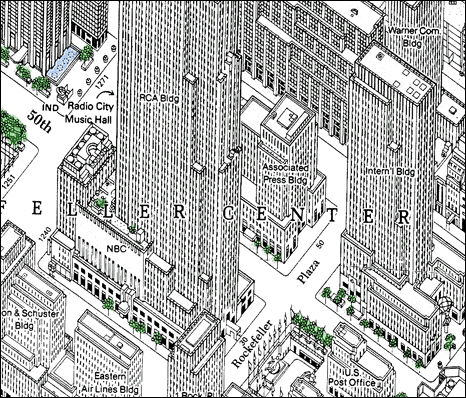
Computing can help by allowing many more criteria into the mix, and allowing them to vary continuously. This is an application of Edward Tufte’s design strategy “to clarify, add detail,” which he introduces in Envisioning Information (1990, p. 37) with the example of The Isometric Map of Midtown Manhattan. Human nature means we may be a little uneasy with the result, but perhaps we can learn to live with it; most people are comfortable nowadays with weather forecasts that say there’s a 50% chance of rain tomorrow (although many may not actually understand what it means ...).

Hiding the criteria has its own dangers. As Bowker and Star argue in Sorting things out: classification and its consequences (1999), any classification encodes a world view, and even “simple” classification systems succeed in making themselves invisible.

Still, with a little more computing we could, in response to the question “Is it, or isn’t it?” answer in a rigorous way, “Ish.” Computers can handle composing dozens or hundreds of continuous criteria in ways our (conscious) brains cannot.